Managing the Risk of Falls
Generic falls code — applies to any workplace, not just construction. Same hierarchy, same logic; covers warehouses, retail, maintenance, utilities. For housing-specific work, use falls_in_housing_construction.
- Apply the 6-level fall hierarchy in order. Don't jump to ladders or harnesses.
- No fall arrest without a written, tested rescue plan — suspension trauma kills.
- Edge protection: top rail 900–1100 mm, mid-rail or infill ≤ 275 mm, toeboard 150 mm.
- Anchor points need 15 kN SWL minimum and a competent person sign-off.
- Buddy system always. No one on a harness alone.
1. Who's responsible
PCBU — primary duty: eliminate or minimise fall risk so far as is reasonably practicable.
Officers — verify the systems exist (anchor certification, scaffold inspection, training, rescue plans).
Workers — comply with controls; report defects (cracked harness webbing, damaged anchors, bent rails).
2. Scope
- All workplaces with fall risk (construction, warehouses, retail, utilities, maintenance, services).
- Housing construction has its own code — see falls_in_housing_construction.
- "Fall" = any drop from one level to another reasonably likely to cause injury — includes falls into pits/trenches as well as off platforms.
- Approved Code of Practice; from 1 July 2026 complying with it (or an equivalent/higher standard) becomes a positive duty.
3. The 6-level fall hierarchy (Reg 78–79)
Apply in order — drop to a lower level only when higher levels aren't reasonably practicable:
- Eliminate the need to work at height. Redesign, prefabricate at ground, extended-reach tools, lower the storage shelf, position the equipment near ground.
- Solid construction. Work from a structurally sound platform with edge protection and safe access.
- Fall prevention devices. Guardrails, scaffolds, EWPs, mast climbers, workboxes, temporary work platforms.
- Work positioning systems. Restraint (harness + short lanyard preventing reach to edge), industrial rope access.
- Fall arrest systems. Harness + lanyard with shock absorber + anchor. Requires rescue plan.
- Administrative controls. No-go areas, permit systems, sequencing, supervision. Only when higher-order controls are impractical.
A ladder is NOT a control on its own — it's an access tool. Use only for low-risk, short-duration, single-handed work.
4. Eliminate at design
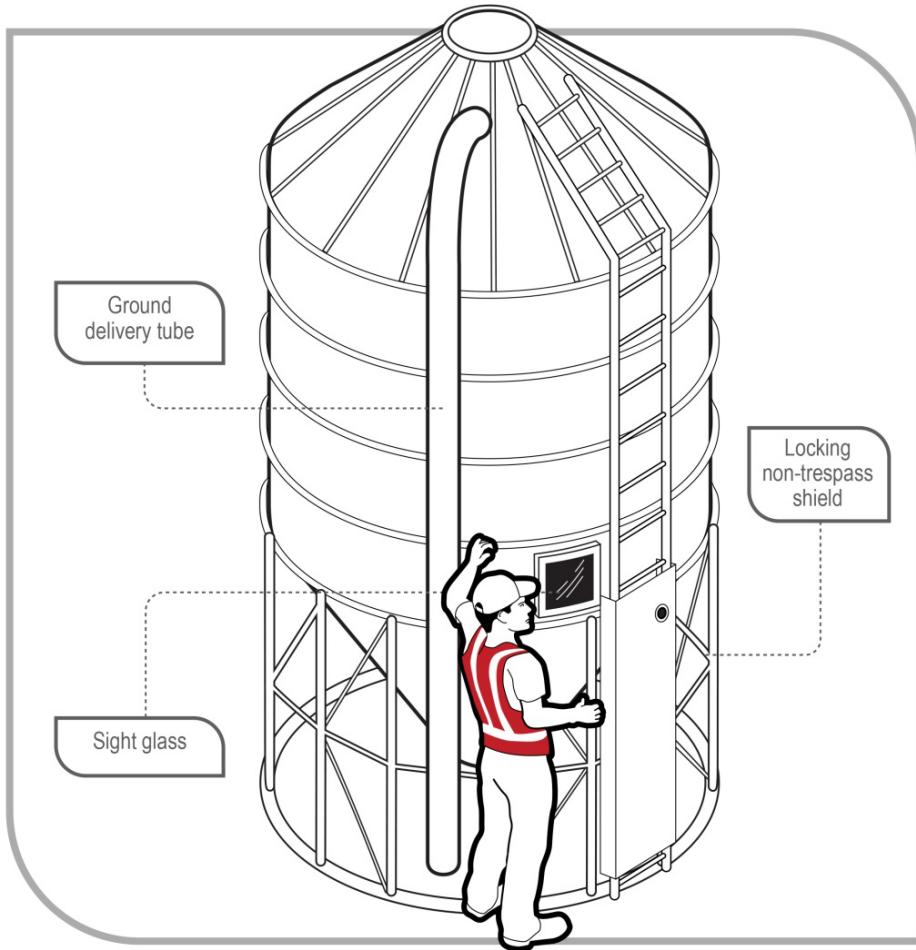 Figure 1 — Silo design with sight glass and ground-level delivery tube. The original required workers on top to check level and connect; the redesign moved everything to ground. Best control: eliminate WAH from the system.
5. Solid construction (Reg 78)
A "solid construction" surface has:
- Structural capacity for all workers, materials, tools, dynamic loads (engineer assessment if uncertain).
- Edge protection — guardrails / balustrades / wire mesh on all open edges, openings, mezzanine edges, stairs, shafts, pits — capable of withstanding a falling person's impact.
- Surface character — non-slip, trip-free; gradient ≤ 7° (1:8) generally, ≤ 20° (1:3) if cleated; even and negotiable.
- Safe access/exit — permanent (platforms, ramps, stairs, fixed ladders) for entry, exit, movement.
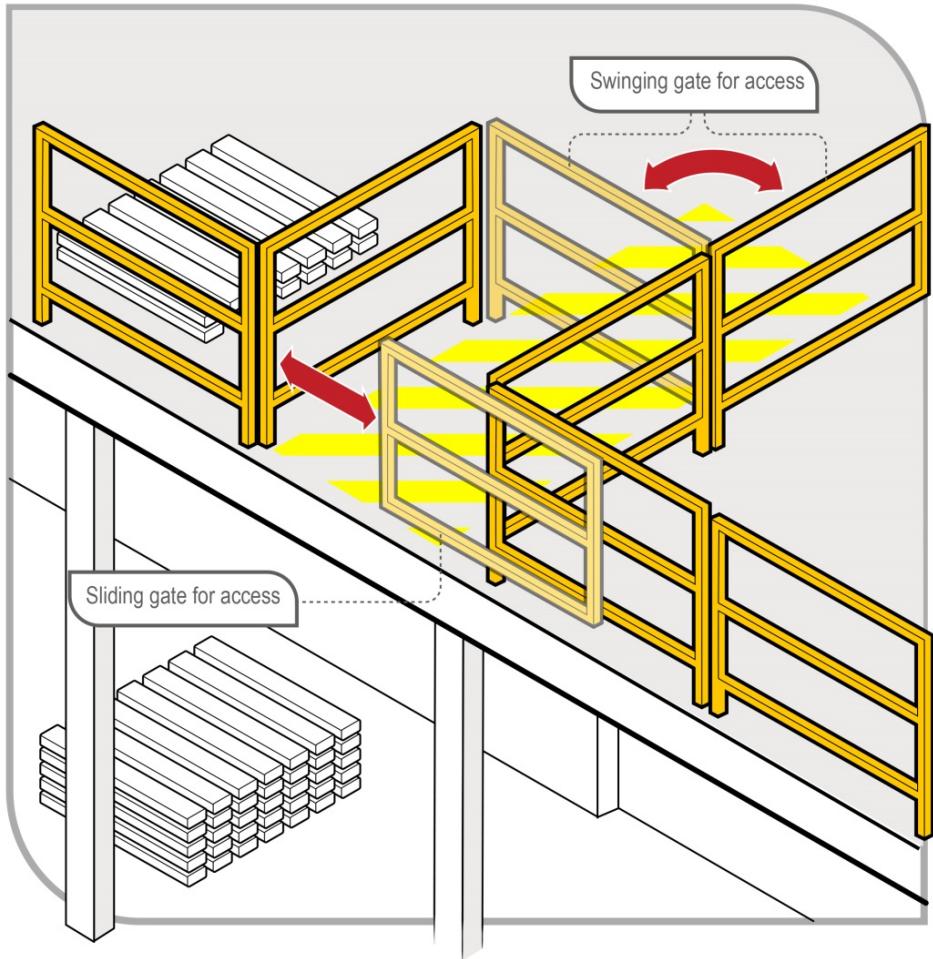 Figure 2 — Mezzanine with full edge protection. Solid construction with safe access — the second-best control after eliminating the WAH need.
6. Edge protection — specs
- Top rail: 900–1100 mm above working surface.
- Mid-rail or infill mesh: gaps ≤ 275 mm.
- Toeboard: ≥ 150 mm — stops tools/debris falling.
- Capacity: must withstand impact force of a falling person.
- Where: perimeters, mezzanine edges, openings, stairs, landings, hoist access. Self-closing gates at access points.
7. Scaffolds
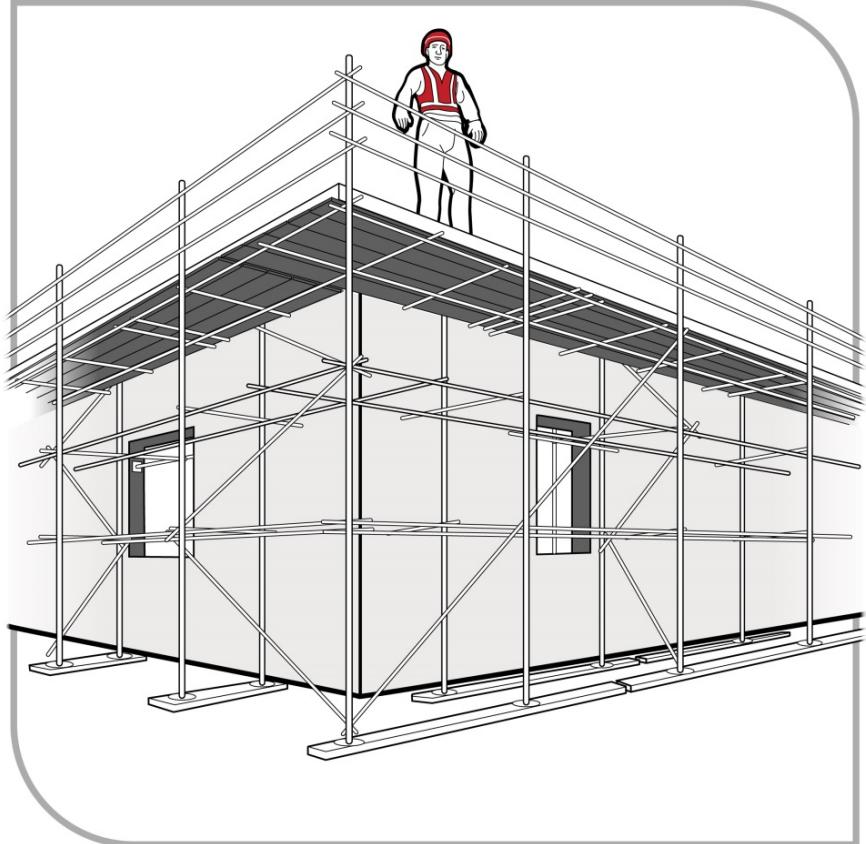 Figure 3 — Perimeter scaffold with full deck, top rail, mid-rail, and toeboard — the canonical fall-prevention device.
Duty ratings (per bay):
| Duty | Capacity | Plank count |
|---|---|---|
| Light | ≤ 225 kg | ≥ 2 (≈ 450 mm) |
| Medium | ≤ 450 kg | ≥ 4 (≈ 900 mm) |
| Heavy | ≤ 675 kg | ≥ 5 (≈ 1000 mm) |
| Special | designed | per design |
Inspection cadence
- Before first use; written competent-person inspection if fall > 4 m possible.
- After any incident (storm, impact).
- After repair / alteration.
- At least every 30 days (competent person).
- Before resumption after incident.
Tag and access control: danger tags + warning signs on incomplete unattended scaffolds; restrict access during erection/dismantling.
HRWL (erect/alter/dismantle scaffolds with > 4 m fall): basic / intermediate / advanced scaffolding licence — or enrolled in training and supervised by an HRWL holder. Suspended scaffolds: advanced rigging or advanced scaffolding HRWL.
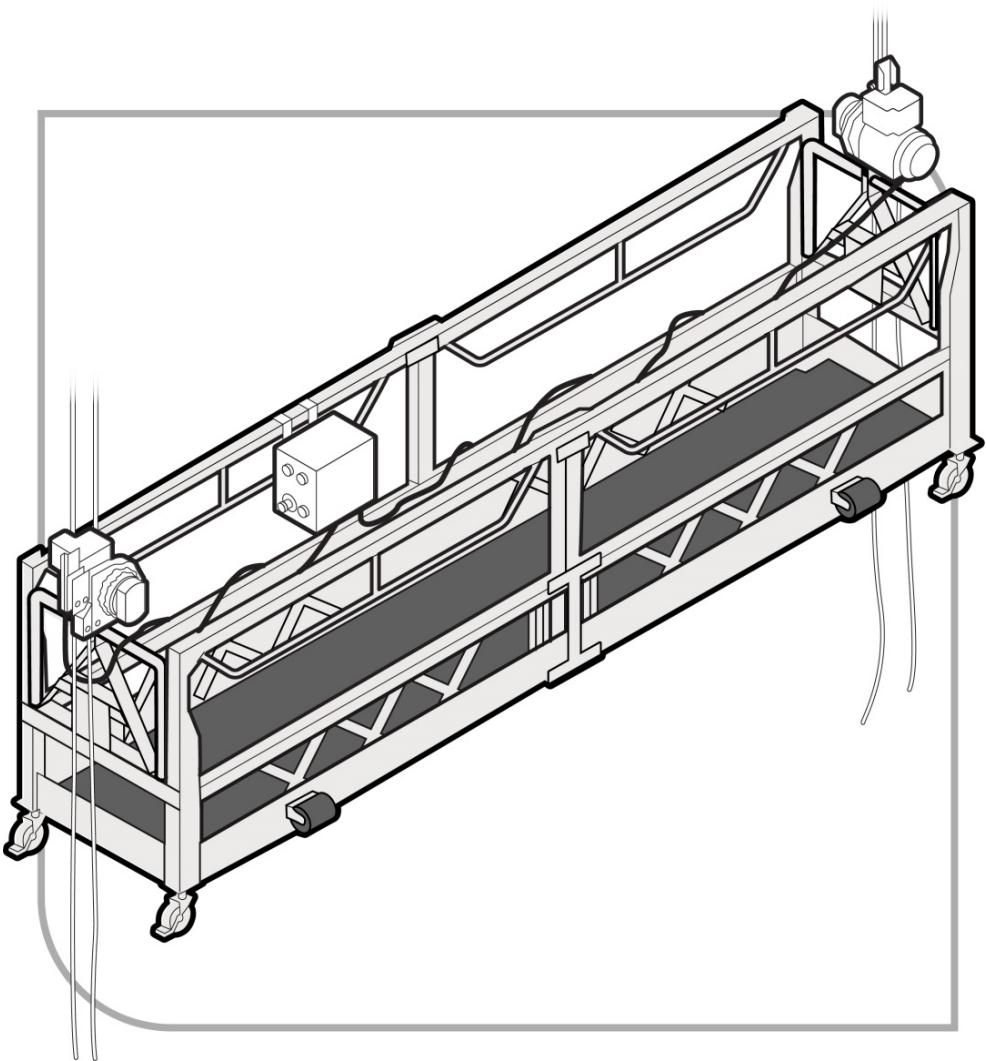 Figure 4 — Suspended (swing-stage) scaffold cradle. Used for façade/maintenance work; HRWL Advanced rigging or advanced scaffolding required.
8. EWPs / scissor lifts / boom lifts
Pre-start
- Identify hazards: electrical contact, overturning, falling from platform, crush.
- Ground stability: solid, level, no voids, no undercut. Outdoor / rough-terrain only if rated.
- Visual: penetrations, obstructions, overhead clearance to powerlines.
Harness use
- Boom lifts / cherry-pickers / travel-towers: full-body harness + lanyard required if you can't fully prevent ejection. Lanyard as short as possible; attach to the manufacturer's designated anchor (NOT the handrail unless specified).
- Scissor lifts: edge protection / handrails are the primary control; harness only if specified.
HRWL: Boom-type EWPs > 11 m boom = HRWL EWP class. ≤ 11 m and scissor lifts = no licence, but training still mandatory.
9. Fall arrest systems
Fall arrest is the 5th control — used only when 1–4 are not reasonably practicable.
Components: full-body harness, lanyard with shock absorber, anchor, karabiners/snap hooks, optionally inertia reel or rope grab.
Anchor
- Comply with AS/NZS 1891.4 — typically 15 kN (≈ 1500 kg) SWL minimum for arrest.
- Insert anchors (friction, chemical, screw) shouldn't be used for direct pull-out unless engineered (expansion bolts, chemical with pull-out test).
- Test/approve every anchor by competent person before first use.
Lanyard with shock absorber
- Free-fall distance: max 2 m (preferably less).
- Total fall = body height + lanyard + slack + anchor position + absorber extension. Must clear the ground/structure below.
- Anchor as high as the equipment allows; minimise slack.
Rescue plan — mandatory
- No fall arrest without a written, tested rescue plan.
- Suspension trauma: unconsciousness possible within 15 minutes of vertical suspension; renal failure / death if rescue is delayed.
- Plan for prompt rescue (target < 5 min); train all workers; equipment on site; never alone.
- Suspension foothold straps recommended where rescue may take longer.
10. Ladders
Same rules as in housing construction:
- Low-risk, short-duration, single-handed only.
- 4:1 rule for setup; secured top and bottom.
- Three points of contact; tool belt.
- No work above shoulder; no two-handed power tools.
- No straddling; never on metal ladders near live electrical.
- Stop ≥ 900 mm below top (single/extension); 2nd tread from top (stepladder).
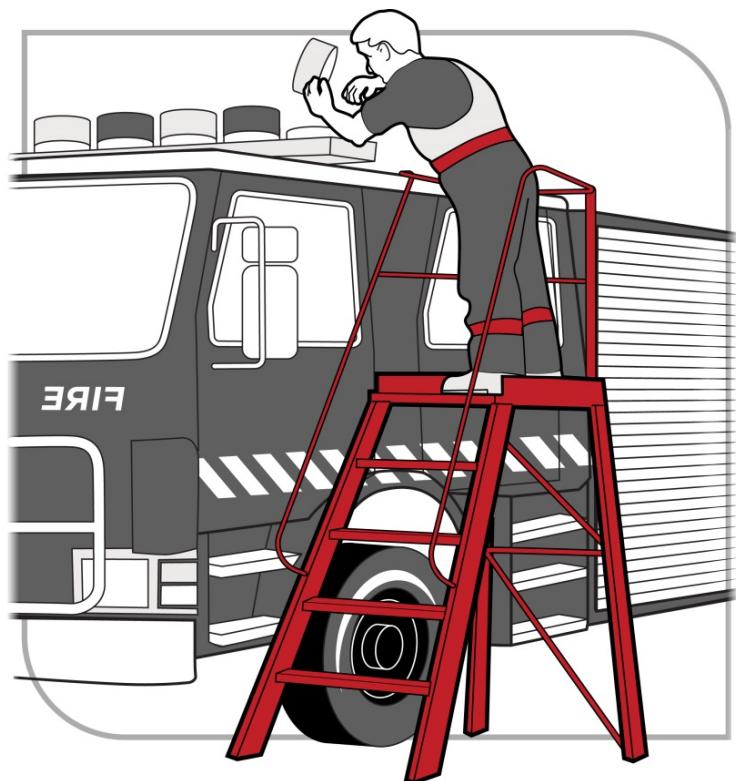 Figure 5 — Step platform: stable working surface + partial handrail. Often a better choice than a single or extension ladder.
11. Voids, holes, openings
- Cover immediately on formation.
- Cover rated for ≥ 2 kN point load (200 kg).
- Marked clearly: "DANGER HOLE BENEATH".
- Prefer engineered covers; bare plywood is hard to assess.
- If not covered, barricade + signage.
12. Roof work (general)
- Pitch and anchor assessment before access.
- Guardrails, safety mesh, or catch platforms at the perimeter.
- Restraint preferred over arrest — easier rescue, lower equipment risk.
- Buddy mandatory if harness used.
13. Training
- Work-at-Height (WAH) — all workers; hazards, controls, role-specific.
- Harness use — individual training before any use; rescue procedures.
- Scaffold erection — HRWL or enrolled + supervised.
- EWP operation — type-specific + electrical hazards + rescue procedures.
- Rescue training — before deploying any fall-arrest system; immediate-action competence; equipment use.
- Refresher to maintain competence on irregular tasks.
14. Records
- Scaffold register — type, location, erection/dismantling dates, inspection dates, competent-person certification.
- EWP daily log — operator, pre-start checks, ground conditions, incident/near-miss.
- Harness inspection log — serial numbers, inspection dates, defects, removal-from-service. Retire after any arrest or visible damage.
- Anchor certification — pull-out test data (insert anchors), date, competent-person sign-off.
- Training records — name, course, trainer, date, refresher cycle.
- SWMS — required for any HRCW > 2 m fall risk; includes hazards, controls, rescue plan.
15. Common pitfalls / quick wins
Do
- Always ask "can we do this at ground level or from a solid platform?" before rigging harnesses.
- Pull-out test insert anchors; verify ≥ 15 kN; engineered fixings preferred.
- Document and test the rescue plan; train workers; cannot use harness without it.
- Enforce buddy system. At least one other person on site capable of rescue.
- Step platforms beat ladders for repeated low-level tasks.
- Inspect harnesses before every use; retire after a fall or visible damage; store dry, shaded.
- Verify hook compatibility with ring/anchor — avoid roll-out on small bolts.
Don't
- Use fall arrest as the first control. It's the 5th in the hierarchy for a reason.
- Use a ladder for extended work or any two-handed task.
- Leave a worker alone on a harness.
- Daisy-chain snap hooks.
- Re-use a harness after a fall.
- Store harnesses wet, in direct sun, or near chemicals.
16. Cross-references
- Housing-specific: falls_in_housing_construction
- See also: general_construction_work, managing_risks_of_plant (Phase 3 — EWPs)
- Foundations: risk_management_process
- Glossary (HRWL, SWMS, restraint vs arrest): glossary_and_key_concepts
Source: managing_risk_of_falls.md (Safe Work Australia, model Code of Practice, CC-BY-NC 4.0). Edition: October 2018. Last verified against SWA: 2026-04-27.